ServicesResidential Roofing
Residential Roofing in Combine, TX
We install complete roof systems on homes, from the decking up to the ridge, and we schedule the work for the right window before the weather turns. You get a clear plan, a careful crew and a finished roof that is ready for the season ahead.
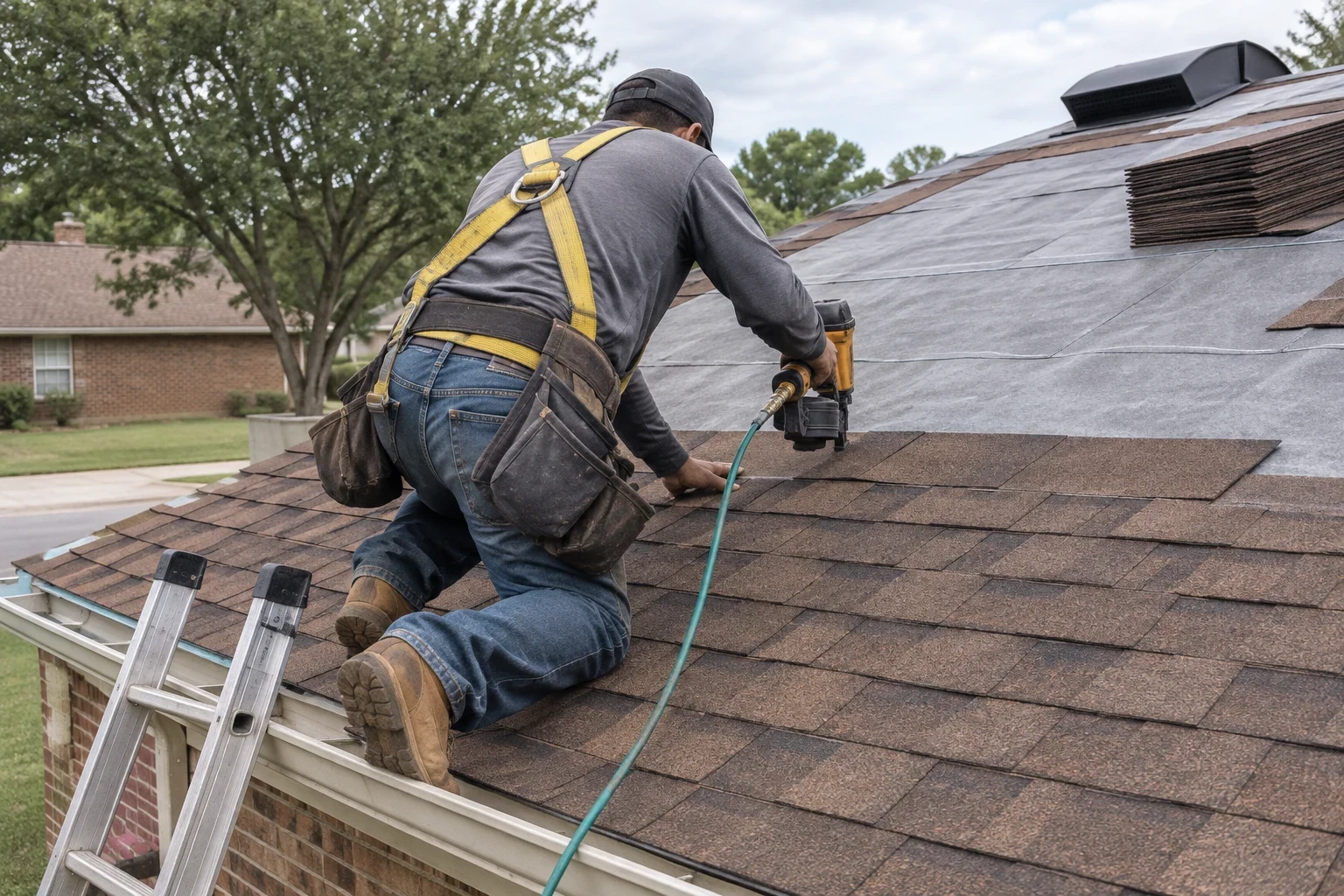
A new roof, put on in the proper order at the proper time
A residential roof is a full system for keeping water out: sound decking, underlayment, flashing at each wall and chimney, ventilation, and the shingles or metal panels seen from the street. Put those layers on in the correct sequence and the roof drains water, breathes and keeps its finish for years.
When the work happens matters as much as what goes on. Shingles seal best in dry, moderate weather, and a well-vented attic makes the long summer easier on your house and your cooling bill. We check your roof well ahead of spring storms or the first hard freeze and schedule the install so the new roof is ready when it is needed.
Each estimate is itemized, so you know what every part of the job includes before you make a decision.
What goes into a new roof on your home
- Stripping down to the wood
- We take the old roof off all the way to the decking. It is the only real way to spot soft or rotten boards, and you see photos of anything we find before we replace it.
- Underlayment and self-sealing barrier
- Synthetic underlayment covers the full deck, and a self-adhering barrier goes in the valleys, around penetrations and along the eaves where water gathers.
- New flashing and drip edge
- Fresh metal flashing where the roof meets walls, chimneys and skylights, and drip edge on every edge. These joints are where most leaks start, so we work slowly here.
- Balanced attic ventilation
- We pair intake with exhaust, most often soffit vents and a ridge vent, so attic heat and moisture escape rather than baking the shingles from underneath.
- The finish you pick
- Choose architectural asphalt shingles, impact-rated shingles or standing seam metal. We explain how each holds up to heat, hail and wind, and how each color looks on your house in bright sun.
- Protecting the property and cleaning up
- Landscaping gets tarped, walls get plywood where it is needed, and each day ends with a magnet sweep of the yard and driveway for nails.
Signs your home is ready for a new roof
Curling or cupped shingles
Edges that lift or corners that curl mean the shingles have dried out under years of heat. They no longer seal flat, and wind gets underneath.
Bare spots and loose granules
Granules protect asphalt from sunlight. If you see them washing onto the driveway or patches of dark, bare mat on the roof, the shingles are near the end of their life.
A roofline that dips
A sag between rafters often points to decking that has soaked up moisture. It is worth a look before the next rainy stretch.
Water stains that keep returning
Brown rings on a ceiling, or damp insulation in the attic after rain, show that water is finding a path through the layers.
A hot, stuffy attic
If the attic feels like an oven in summer, ventilation may be poor. Trapped heat shortens shingle life and pushes your cooling bill higher.
How the work goes, from first call to final sweep
- 1
Your call and our visit
After you call, we pick a time to come to your home. We go up on the roof and into the attic, take measurements, and talk about materials and which season you want the roof done before.
- 2
An estimate you can read
We put each part of the job on its own line: removing the old roof, any replacement wood, underlayment, flashing, vents and the finish you picked. You see what every piece costs instead of one lump sum.
- 3
A date chosen for the weather
Where we can, we book install days with dry skies and moderate temperatures, and we handle the permit if the city calls for one. You have the start date well in advance.
- 4
The day of the install
On most homes we strip and dry in the roof on day one, so nothing is left open overnight. The crew moves section by section and tries to keep your driveway usable.
- 5
Final walkthrough and cleanup
We look over the finished roof together, show you photos of what went in underneath, and run a magnet across the yard and drive for stray nails before we pack up.
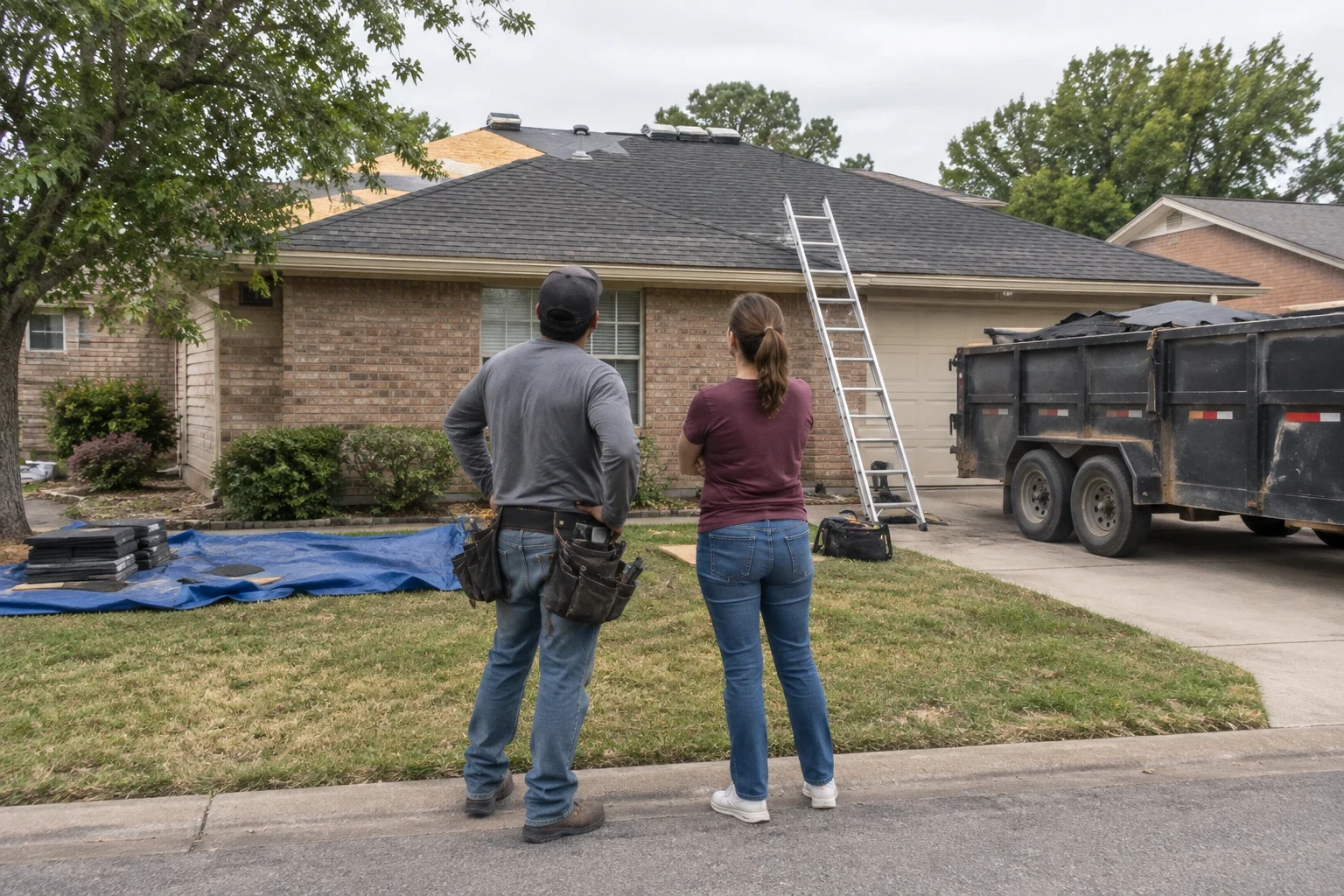
What sets the cost of a new roof
We give a price only after measuring the roof and checking the attic, so you get a number once we have visited your home. These factors matter most, and your written estimate lists each one so you see where the money goes.
- Size and steepness
- Shingles and panels are ordered by measured area, so a bigger roof takes more of them. A steep slope calls for harnesses, roof jacks and slower work on each row, and the labor reflects that time.
- Your choice of material
- Architectural shingles, impact-rated shingles and standing seam metal vary in upfront price, expected life and how they look on your house.
- The decking under the old roof
- Solid wood changes nothing. Soft or rotten boards are swapped out sheet by sheet, and you see a photo of each one before it is added to the bill.
- Valleys, dormers and roof features
- Chimneys, skylights, dormers and valleys each need flashing cut and fitted by hand. A simple gable goes faster than a roof where many planes meet at angles.
- Extra layers and access
- Each additional layer of old shingles adds tear-off and disposal time. A tight lot or short driveway can change how and where we drop materials.
Common questions about a new home roof
Something not covered here? (972) 992-5130
What time of year is best for a new roof?
Mild, dry weather is ideal, since shingles bond well and the crew can work steadily. Plenty of homeowners pick fall so the roof is on before winter and spring storms, and others go with early spring ahead of the summer heat. We will help you settle on a window that fits your plans.
Can the new roof go on top of my current shingles?
We strip the old roof down to the decking instead. Layering on top covers up rotten wood, traps heat under the new shingles and adds weight to the framing. Starting from bare wood means we can find and fix problems before they are hidden.
How many days does installation take?
For a typical single-family house, the crew is usually done within a day or two after the tear-off. A large footprint, a steep pitch or a lot of new decking can stretch that. Your estimate states the schedule we expect so you can plan for it.
Do I need to be home while you work?
No, carry on with your day, as long as we can call you if something comes up. Move cars out of the garage and take down pictures or mirrors, since nailing sends vibration through the house.
What roofing holds up best here?
Impact-rated shingles handle hail better than standard shingles, and standing seam metal reflects summer sun and drains rain fast. Architectural shingles remain a solid, attractive pick for many houses. We bring samples so you can see color and texture outside in daylight.
Get your roof ready before the next season arrives
Tell us about your home and when you would like the work finished. We will come out, measure, and give you a free written estimate with no pressure to decide on the spot.