ServicesCommercial Roofing
Commercial Roofing Contractor in Combine, TX
Offices, shops, churches and warehouses get low-slope and metal roofs from us, installed new or kept in shape. We time every job to the season ahead and to your business hours, so the roof is ready before bad weather and customers can still come and go during the work.
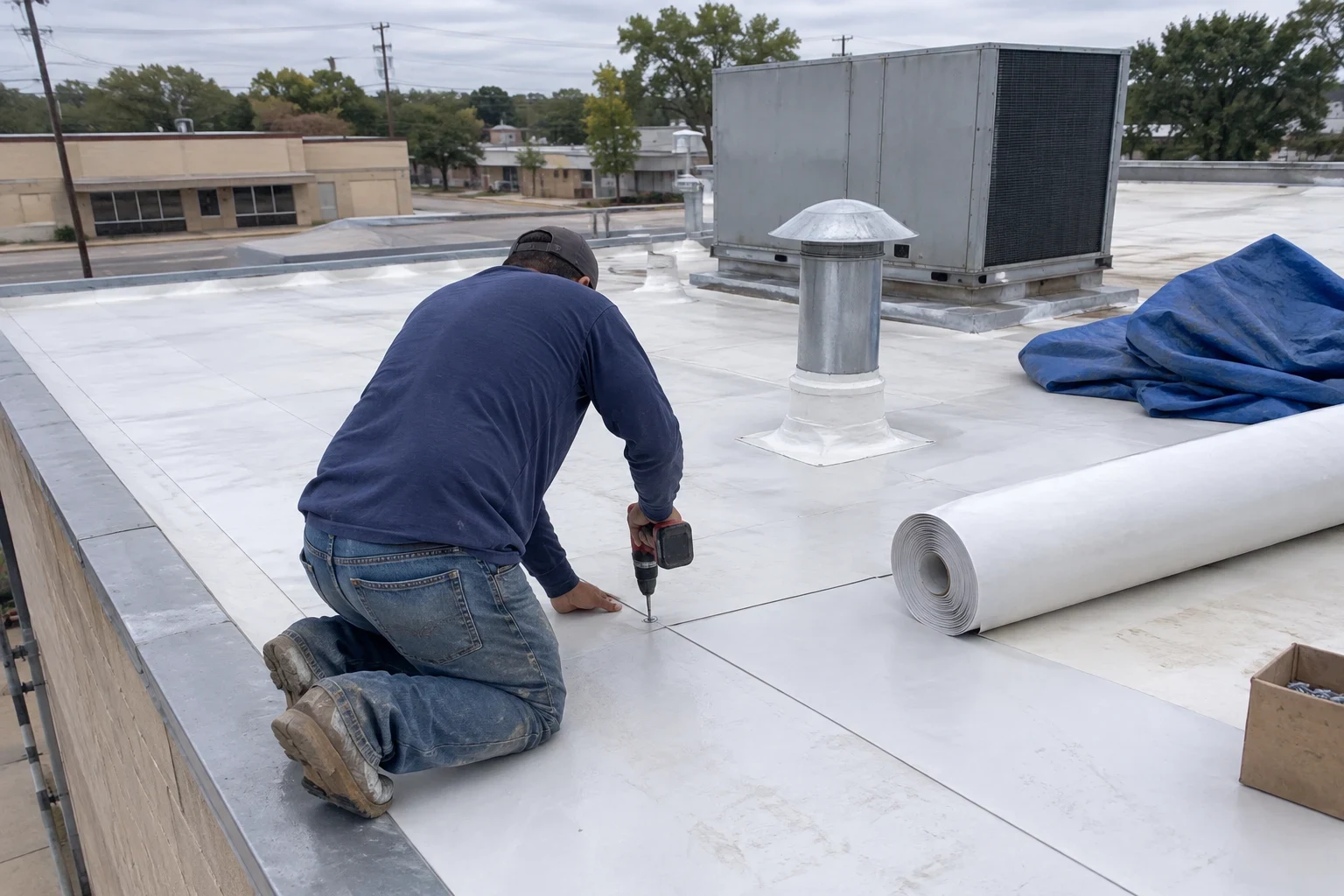
A roof that is ready before the weather asks
Commercial roofs fail differently from the pitched roofs on most houses. Water sits instead of running off, seams carry the load that shingle overlaps would, and rooftop units punch holes through the membrane that each need their own flashing. When one of those details lets go, the first sign is usually a stained ceiling tile over a desk or a shelf of inventory.
Our approach is to time the work. Membranes and coatings bond best in dry, mild weather, so we plan installs and coating projects for the windows when the material will cure properly, and we finish the drain and flashing work before spring storms and the long North Texas summer arrive. You get a schedule built around the calendar, not around a crisis.
We keep the finish neat because people see it: clean terminations at the parapet, straight metal edge, sealed penetrations that look deliberate. Care at those edges is where a commercial roof earns its years.
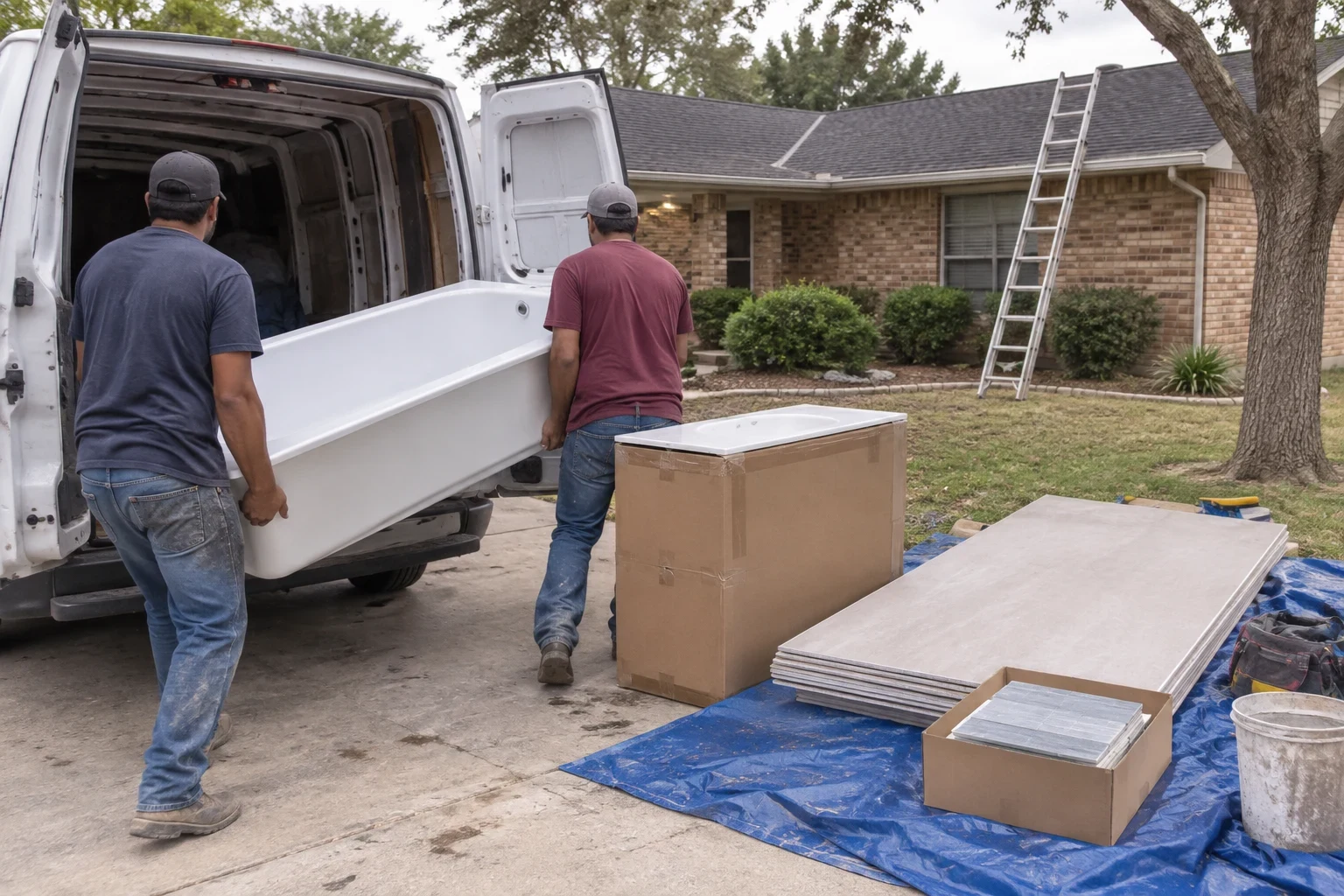
The commercial roofing work we take on
- 01
TPO and EPDM single-ply roofs
On flat and low-slope decks we lay TPO or EPDM membrane over insulation board cut to fit the building, and we weld or adhere the seams exactly as the manufacturer specifies. Before you pick one, we walk you through how the two differ.
- 02
Metal panels, standing seam or exposed fastener
Metal buildings and sloped commercial roofs get panels set with the right clips, closures and trim. Fasteners are where metal roofs usually start to leak, so we place every one with care.
- 03
Silicone and acrylic coatings
A coating can seal an existing membrane or metal roof that is still sound and bounce summer heat away from the building. We suggest one only when the roof below is dry and firm enough to support it.
- 04
Drainage and flashing details
Drains and scuppers are placed so water runs off rather than sitting, and curbs, pipes and HVAC stands are flashed carefully, because those spots decide whether the roof keeps water out.
- 05
Spring and fall upkeep visits
Ahead of spring and again ahead of winter, we clean out drains, inspect seams and sealant, and photograph any trouble spots so you can budget for them.
Questions about Commercial Roofing?
Call(972) 992-5130Signs your building's roof needs attention
Water standing two days after rain
Ponding that lingers breaks down membranes and adds weight to the deck. It usually points to a clogged drain, a low spot in the insulation or a deck that has deflected.
Blisters, wrinkles or open seams
Bubbles in the membrane mean moisture or air is trapped underneath. Seams that lift at the edges let water travel under the roof far from where it shows up inside.
Stained ceiling tiles
A brown ring on a drop ceiling is often the first visible clue. The source may be several feet away, so we trace it from the roof side.
Loose fasteners or rust on metal panels
Washers dry out and back off as metal expands and contracts through hot days and cool nights. Rust around fastener heads or at panel laps means water is already getting in.
Cooling bills that keep climbing
A dark, aging roof surface soaks up summer heat. A reflective coating or a new white membrane can take real load off the rooftop units.
How a commercial roofing project runs
- 1
A phone call and a site visit
You call, we set a time to come out, and we walk the roof with you or your building manager. We look at the deck, drains, flashing and rooftop equipment, and we take photos as we go.
- 2
A written, line-item estimate
You receive a free estimate that separates materials, labor, permits and any deck work, along with the photos and our honest view of which system fits your building and budget.
- 3
A schedule set by season and your hours
We pick a weather window that suits the material and work around your opening hours, deliveries and tenants. If a crane or lift is needed, we coordinate it in advance.
- 4
Work days and daily cleanup
We protect entrances, parking areas and landscaping, keep the roof dry at the end of each day, and clear fasteners and scrap from the ground before we leave.
- 5
Walkthrough and records
When the work is done, we walk the roof with you, hand over photos of the finished details and note when the next seasonal visit makes sense.
What moves the cost of a commercial roof
No two commercial roofs price the same way, so we only give a figure after we have walked yours. Each cost driver appears as its own line on the estimate. That makes it plain which items need attention now and which can be planned for a later season.
- Square footage and system
- Size sets the baseline. A TPO membrane, a metal panel system and a coating each carry very different material and labor costs.
- What is under the surface
- Wet insulation or a damaged deck has to be addressed before anything new goes on top. We probe and photograph these areas so the estimate reflects reality.
- Rooftop equipment and access
- HVAC units, vents and skylights each need flashing. Building height, parapets and how materials get to the roof also affect labor.
- Permits and timing
- Permit requirements vary by city. Work scheduled during a calm, dry stretch tends to move more efficiently than work squeezed in during a wet spring.
Common questions about commercial roofs
Do I have to close while the roof is being worked on?
Usually not. Loud work and material lifts are scheduled around your hours, entrances stay open and walkways are protected. If part of the building does need to close briefly, you hear about it before we set the date.
What season works best for a commercial roof project?
Fall, and the stretch from late winter into early spring, tend to work best. Adhesives and coatings like those temperatures, and the worst storm weeks are either still coming or already past. Summer work is possible too; we just plan around the hottest hours.
How do I pick between TPO, EPDM, metal and a coating?
It comes down to the condition of the deck, how you use the building and how long you expect to keep it. Coatings only work over a surface that is still sound. Your estimate compares the options side by side and tells you which one we favor and why.
Will you get the permit?
Yes, whenever the city calls for one on the work involved. The permit shows up as a separate line in your estimate, and we take care of the paperwork.
Do you do work inside the building too?
Build-outs and tenant improvements are part of our commercial contracting service. When a project touches both the roof and the space underneath, we plan them together so the crews stay out of each other's way.
Get your building ready for the next season
Tell us about your roof and the season you are planning for. We will walk it, photograph what we find and give you a clear written estimate.